Last updated: November 2026
Sunset is a daily ritual on the Nusa islands. As the afternoon heat fades, people drift towards the west-facing cliffs and beaches, order a cold drink and watch the sky turn from gold to pink to deep purple. Nusa Ceningan and its neighbour Nusa Lembongan have some wonderful places to see it. This guide rounds up the best spots, when to go and how to stay safe on the cliffs.
Quick facts
- Where: the west-facing coasts of Ceningan and Lembongan.
- Top picks: Ceningan’s western cliffs and the Blue Lagoon, the Yellow Bridge, Devil’s Tear and the beaches of Lembongan.
- Timing: arrive 30 to 45 minutes before sunset to find a good spot.
- Best season: the dry season, roughly April to October, usually brings the clearest skies.
- Safety: cliff edges are unfenced, and riding home in the dark needs care.
1. Nusa Ceningan’s western cliffs
Ceningan’s western coast faces the open sea, and its cliff tops are some of the most peaceful places in the islands to watch the sun go down. There is no single viewpoint: drive or walk along the coast and you will find quiet ledges, small cafés and cliff-top bars with uninterrupted views. Sunset here feels like a calm daily ritual rather than an event, which is exactly the appeal.
2. The Blue Lagoon
The cliffs around the Blue Lagoon are a favourite late-afternoon stop. Come an hour or so before sunset to see the lagoon’s famous turquoise water, then stay as the cliffs glow gold and the sea darkens. There are no railings, so keep well back from the edge, especially as the light fades.
3. The Yellow Bridge
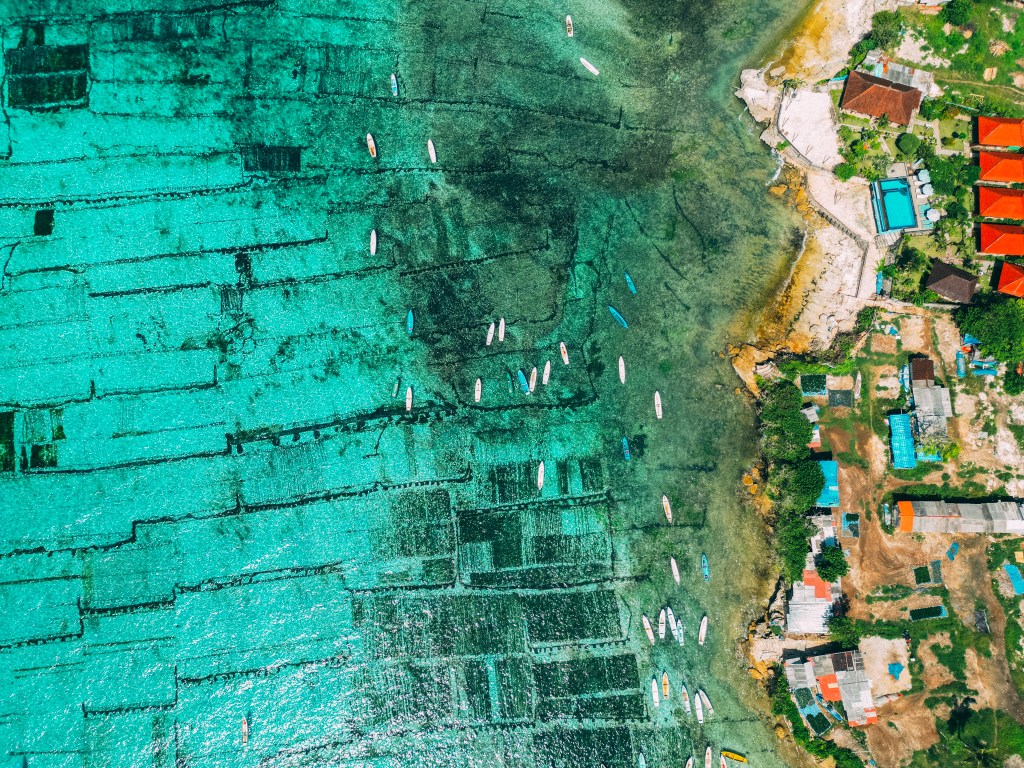
The Yellow Bridge is at its most photogenic in the golden hour, when the yellow paint glows against the water and boats sit silhouetted in the channel. At low tide you can see the seaweed farms on either side. Shoot from the approaches at each end rather than stopping on the bridge itself, which is a busy local route.
4. Devil’s Tear, Nusa Lembongan
Across the bridge on Lembongan’s south-west coast, Devil’s Tear is the most famous sunset spot in the islands. Waves surge into a rocky inlet and explode upwards in great clouds of spray, and in the late afternoon light the mist can catch small rainbows. It is spectacular, and it gets busy, so arrive early.
Take care: the rocks are sharp and slippery, there are no barriers and waves can reach further than you expect. Stay well back from the edge and never turn your back on the sea.
5. Lembongan’s beaches and beach bars
If you prefer sand between your toes, Lembongan’s west-facing beaches are lovely at sunset. The long beach at Jungut Batu is a relaxed option, and several of the island’s bays have beach clubs and bars where you can order dinner as the sky changes colour. It is the most sociable way to see the sun go down.
6. Your own terrace
Many places to stay on Ceningan’s hillsides and cliffs are built to face the sunset. If yours does, a quiet evening on your own terrace, away from the crowds, might be the best show of all.
When to go
- Time: Bali sits close to the equator, so sunset times change relatively little through the year. Check the exact time on your phone on the day and aim to arrive 30 to 45 minutes early.
- Season: the dry season, roughly April to October, usually has the clearest skies. Wet-season sunsets can be dramatic too, with towering clouds, but storms can roll in quickly.
- Stay a little longer: the colours are often best 10 to 20 minutes after the sun has dipped below the horizon.
Photography tips
- Use a foreground. Boats, palms, the bridge or a silhouetted figure give your sunset shot depth.
- Expose for the sky. Tap on the brightest part of the sky on your phone to keep the colours rich.
- Protect your gear. At Devil’s Tear, spray can soak a camera in seconds.
- Put the phone down. Take your shots, then simply watch.
Practical tips
- Plan your ride home. Roads are narrow, unlit in places and busy just after sunset. Ride slowly with your lights on, or arrange a driver.
- Bring a torch or use your phone light for paths back from cliff tops.
- Insect repellent is useful as dusk falls.
- Bring cash for drinks at cliff-top cafés and bars.
- Respect ceremonies. If you pass a temple procession on your way, pull over and let it pass.
Frequently asked questions
Where is the best sunset on Nusa Ceningan?
The western cliffs, including the area around the Blue Lagoon, offer the best open-sea views. The Yellow Bridge is the most photogenic spot for golden-hour light.
Is Devil’s Tear safe at sunset?
It is safe if you stay well back from the edge. The rocks are slippery, there are no barriers and big waves can surge higher than expected. Keep children close.
Can I see sunset from the Yellow Bridge?
Yes, the late-afternoon light on the bridge is beautiful. Watch from the ends rather than blocking traffic on the bridge.
When is the best season for sunsets?
The dry season, roughly April to October, usually has the clearest skies, though wet-season sunsets can be spectacular between showers.
How do I get back after sunset?
Most visitors ride scooters. If you are not comfortable riding narrow roads in the dark, ask your accommodation to arrange a driver.
Plan your evenings
For more ideas, see our complete Nusa Ceningan travel guide.
Shipwrekd’s private pool villas open on Nusa Ceningan in 2028; register your interest for early access.
Prices, fees and conditions on the islands change often. Always check current details and sea conditions locally.

