Last updated: November 2026
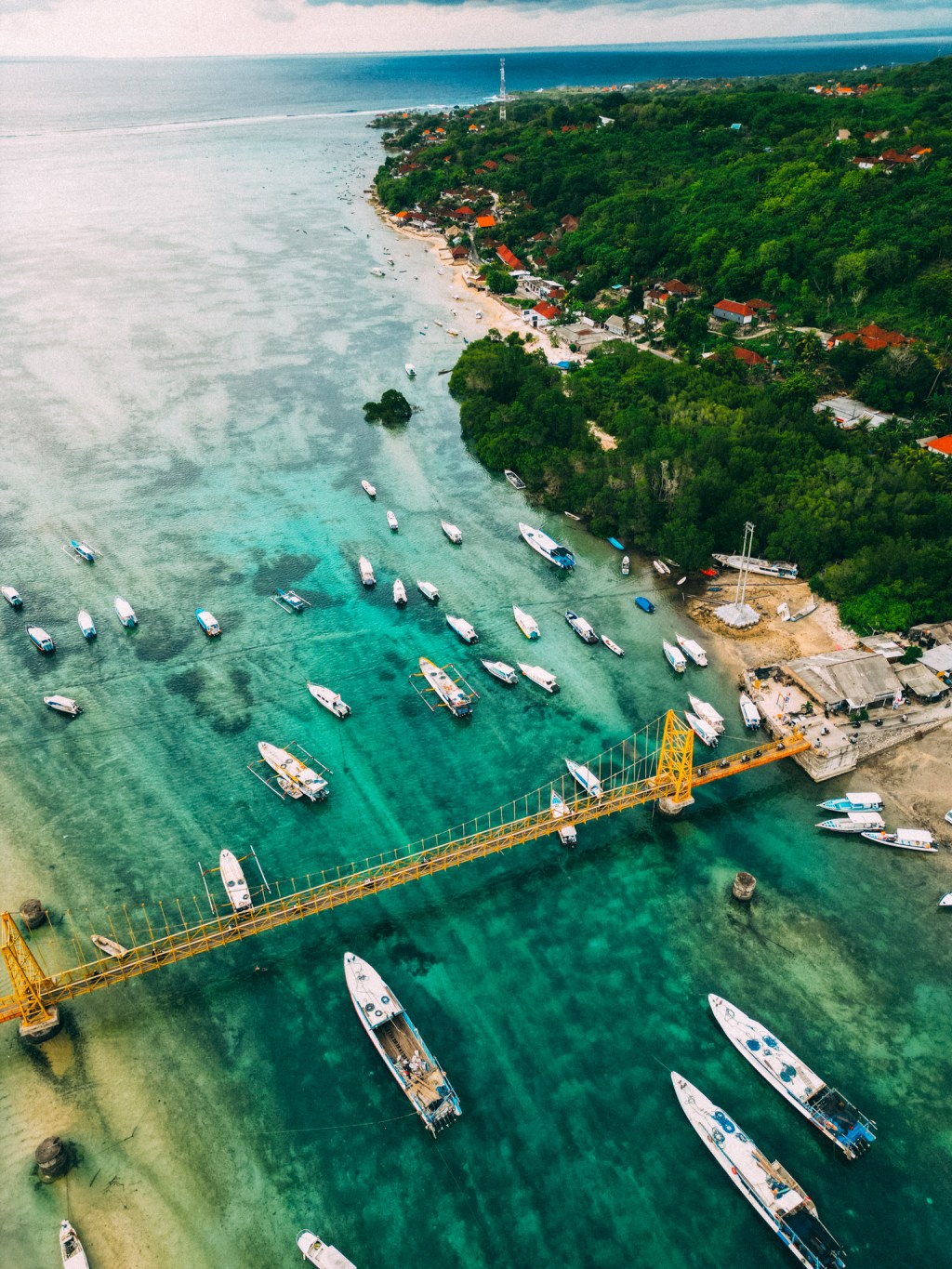
Few landmarks in the Nusa islands are as recognisable as the Yellow Bridge. This narrow, bright-yellow suspension bridge spans the channel between Nusa Lembongan and Nusa Ceningan, and for most visitors it is the doorway to Ceningan. It is also a working link for the islanders who cross it every day, a viewpoint over the seaweed farms and one of the most photographed spots in the area. This guide covers its story, how to cross safely and how to make the most of a visit.
Quick facts
- What it is: a narrow suspension bridge linking Nusa Lembongan and Nusa Ceningan.
- Who can cross: pedestrians, bicycles and motorbikes. No cars.
- History: the original bridge collapsed in 2016; the current steel bridge reopened in 2017.
- Best for: sunset, photos and views over the seaweed farms.
- Cost: no charge to cross.
The story of the bridge
The bridge is a lifeline between two small communities. Islanders use it to get to school, to work, to markets and to temples, and it carries a steady stream of scooters loaded with everything from seaweed harvests to building materials.
Its history includes a tragedy. In October 2016 the original bridge collapsed while it was crowded with people travelling to a religious ceremony, and several people lost their lives. The loss was deeply felt on both islands. While a replacement was built, residents and visitors crossed the channel by boat. The new bridge, built of steel and still painted in its famous yellow, reopened in 2017. When you cross, remember that for many locals this is more than a photo spot.
Crossing the bridge
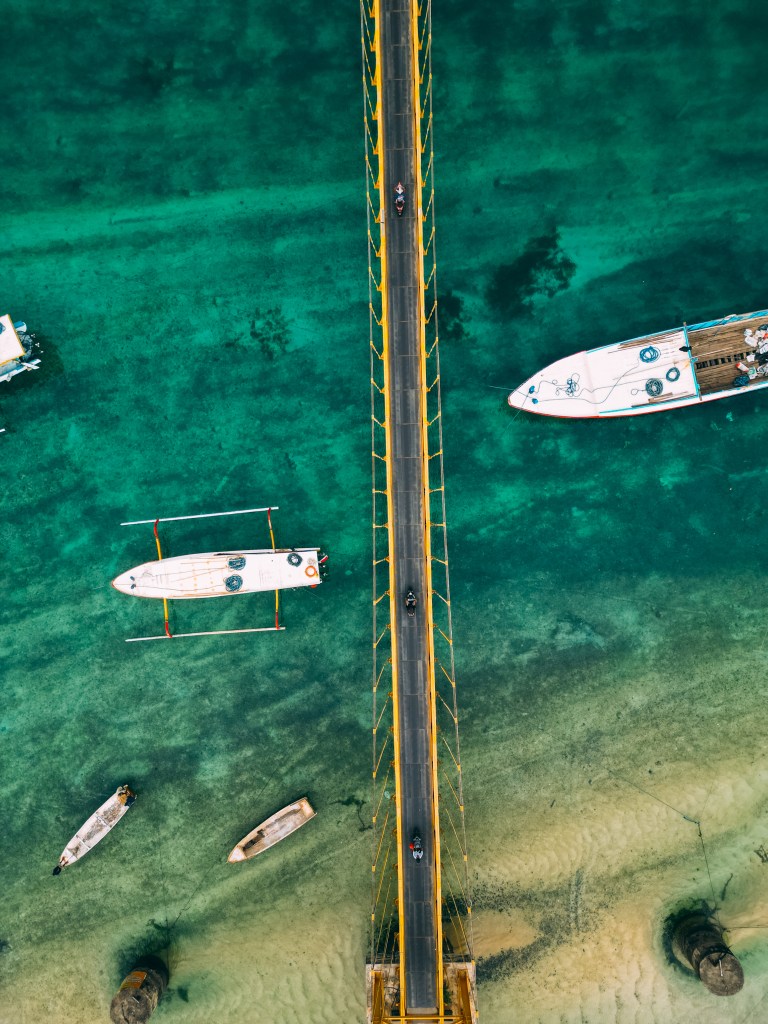
The bridge is narrow, and it carries two-way traffic of people on foot and on motorbikes. It is easy to cross with a little care:
- On a scooter: ride slowly, keep left and give way to pedestrians. Expect to meet oncoming bikes in the middle, so leave space and do not overtake.
- On foot: walking across is a lovely way to arrive, especially in the late afternoon. Keep to one side so scooters can pass.
- With luggage: many places to stay on Ceningan will collect you from the Lembongan side and bring your bags across. Ask when you book.
- Closures: the bridge is occasionally closed to motorbikes for maintenance. If that happens, you may need to walk across and arrange transport on the other side.
Cars cannot use the bridge, which is part of what keeps Ceningan so quiet. If you are arriving from Bali, our guide on how to get to Nusa Ceningan from Bali covers the full journey, including fast boats that stop close to the bridge.
Best time to visit
- Late afternoon and sunset: the bridge is at its most beautiful in the golden hour, when the yellow glows and the water turns to gold.
- Low tide: the seaweed farms on either side become visible as neat underwater plots, and you may see farmers at work.
- Early morning: the quietest time, with soft light and fewer scooters.
Photography tips
- Shoot from the ends. The approaches on both islands give better angles than the middle of the bridge, and you will not block traffic.
- Include the boats. Traditional boats moored in the channel make a great foreground.
- Go aerial if you can. From above, the bridge cuts a yellow line across turquoise water. If you fly a drone, follow local rules, stay clear of people and never fly low over traffic.
- Be quick and courteous. Do not stop scooters in the middle of the bridge for photos when others are waiting.
What is nearby
The bridge is the gateway to Nusa Ceningan’s best spots, all within a short ride:
- The Blue Lagoon, the island’s signature turquoise cove.
- Mahana Point, for cliff jumping and surf.
- Secret Beach, a small sandy cove.
- The seaweed farms, visible from the bridge and the coastal road.
On the Lembongan side you will find more places to eat, shops and the island’s mangrove forest a little further away.
Practical tips
- Wear a helmet whenever you ride, and only rent a scooter if you are a confident rider.
- Respect local life. The bridge is a busy local route; ceremonies and processions take priority.
- Bring cash for drinks or snacks at the small stalls and cafés near the bridge.
- Mind the sun. There is no shade on the bridge itself; bring water and a hat.
Frequently asked questions
Can cars cross the Yellow Bridge?
No. The bridge is open to pedestrians, bicycles and motorbikes only.
Do I have to pay to cross?
There is no charge to cross the bridge. Separate visitor levies apply to the Nusa islands, so check current rules before you travel.
Is the bridge safe?
The current steel bridge replaced the original after its collapse in 2016 and carries heavy daily traffic. Cross at a steady pace, follow any instructions from local officials and avoid stopping in large groups in the middle.
How long does it take to cross?
A minute or two by scooter, a few minutes on foot. Allow extra time to enjoy the view.
When is the best time to photograph the bridge?
Late afternoon into sunset for warm light, or early morning for quiet. Low tide reveals the seaweed farms around it.
Plan your visit
For everything else on the island, see our complete Nusa Ceningan travel guide.
Shipwrekd’s private pool villas open on Nusa Ceningan in 2028; register your interest for early access.
Prices, fees and conditions on the islands change often. Always check current details locally before you travel.

