Last updated: October 2026 · Written by the Shipwrekd team, who are building villas on Nusa Ceningan.
Nusa Ceningan is the smallest and quietest of the three Nusa islands off Bali’s south-east coast. Tucked between Nusa Lembongan and Nusa Penida, it is a place of limestone cliffs, seaweed farms, turquoise lagoons and some of the best sunsets in the region. This guide covers everything you need to plan a visit, from getting there to the spots most day-trippers miss.
Nusa Ceningan at a glance
- Where: Klungkung Regency, Bali, between Nusa Lembongan and Nusa Penida.
- How to get there: Fast boat from Sanur to Nusa Lembongan (about 30 minutes), then cross the Yellow Bridge.
- Getting around: Scooter, bicycle or on foot.
- Best time to visit: The dry season, roughly April to October.
- Don’t miss: Blue Lagoon, Mahana Point, Secret Beach, the seaweed farms and sunset from the western cliffs.
How to get to Nusa Ceningan
There is no direct boat to Nusa Ceningan. Almost everyone arrives via Nusa Lembongan:
- Fast boat from Sanur to Nusa Lembongan. Several operators run daily crossings from Sanur Beach, from early morning until mid-afternoon. The trip takes around 30 minutes. Arrive at the harbour 30 to 60 minutes early, and book in advance in July, August and December.
- Cross the Yellow Bridge. From Lembongan, ride or walk to the famous Yellow Bridge, which connects the two islands. By scooter it is around 15 minutes from most of Lembongan.
Fees to know about: Foreign visitors to Bali pay the provincial tourist levy, and the Nusa islands have their own entry levy collected on arrival. Klungkung Regency has also introduced charges at some attractions on Nusa Penida in 2026. Amounts and rules change, so check the current fees before you travel.
The Yellow Bridge
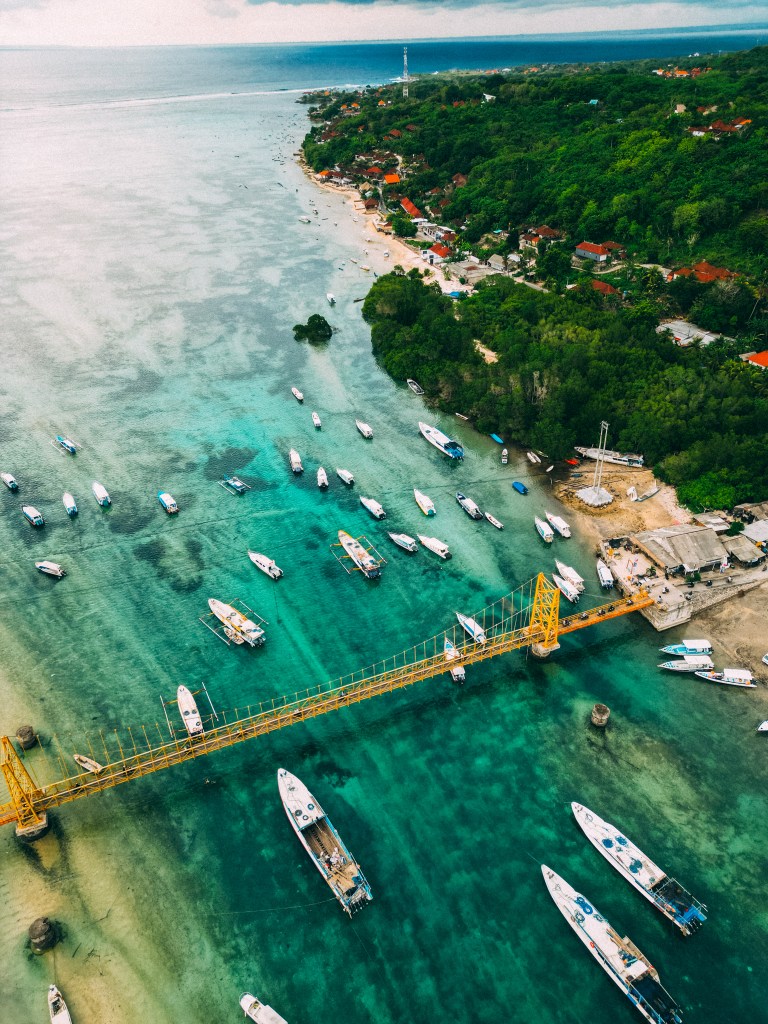
The narrow yellow suspension bridge is the island’s front door and one of the most photographed spots in the Nusas. The original bridge collapsed in 2016 and was rebuilt. Take it slowly: on both sides you will see the seaweed farms that have supported island families for generations, with neat underwater plots visible at low tide. In the late afternoon the light here is beautiful.
Things to do on Nusa Ceningan
Blue Lagoon
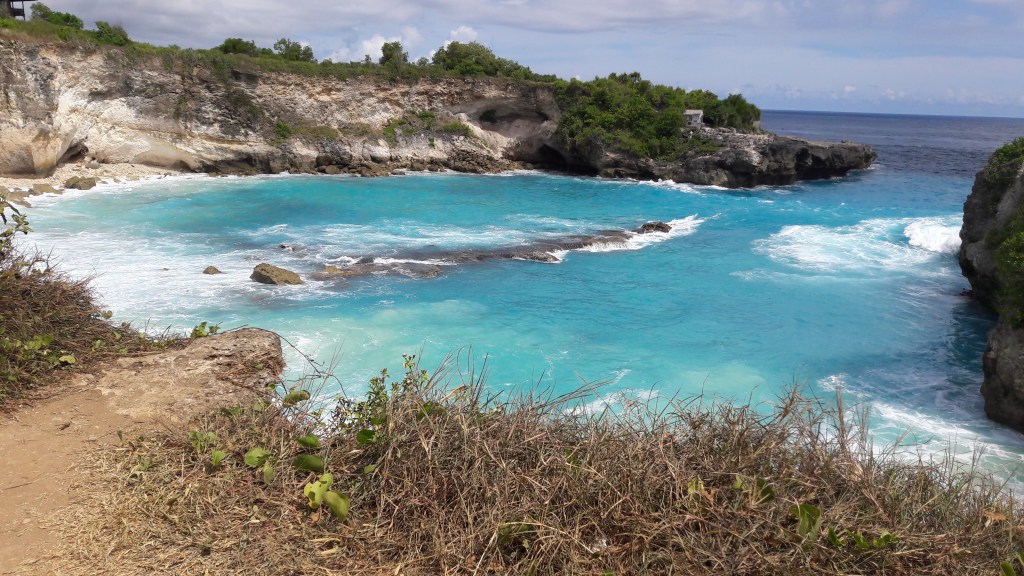
The Blue Lagoon is a small cove of startlingly blue water ringed by cliffs, and it is the island’s signature view. There are cliff-jumping platforms at several heights here, but the swell can be strong and getting out of the water is not easy. For most visitors it is a place to look, not swim. Come at sunset, when the cliffs glow gold.
Mahana Point
Mahana Point is the island’s best-known cliff-jumping spot, with diving platforms of different heights and a ladder to climb back out. A small fee is charged per jump, paid on site. Jump at high tide, watch a few others go first, and check the conditions with the staff. Mahana Point is also a surf break for experienced surfers.
Secret Beach
Secret Beach is a small, sheltered cove with white sand and clear water, and it is one of the few places on the island where you can swim from the shore. Access is usually through a beachside restaurant, where you pay with a meal or a small entry fee. It is a lovely spot to spend a lazy afternoon.
Seaweed farms
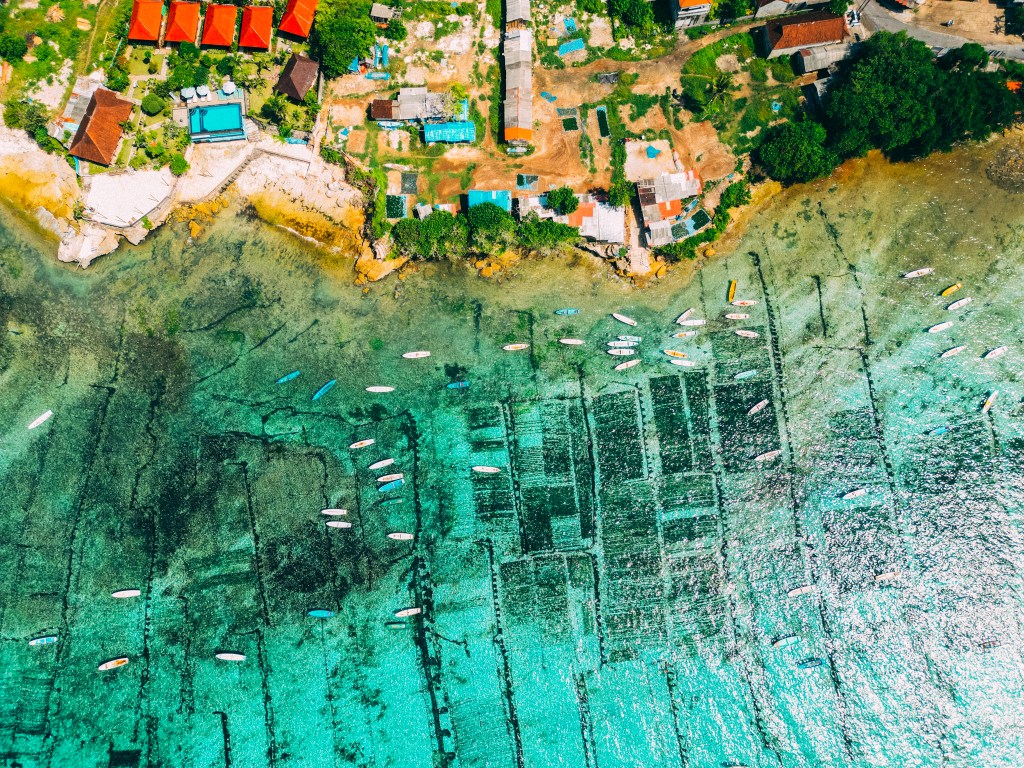
Seaweed farming is part of everyday life on Ceningan. Ride the coastal roads at low tide and you will see farmers tending their plots and laying the harvest out to dry. Be respectful: these are working farms and people’s livelihoods.
Chasing the sunset
Nusa Ceningan’s western cliffs face the open sea, and sunset here is a quiet daily ritual rather than a party. Find a cliff-top warung or a spot near the Blue Lagoon, order a cold drink, and watch the water change from electric blue to gold to deep purple. On clear evenings you can see the coast of Lembongan and the Yellow Bridge silhouetted against the sky.
Diving and snorkelling
The waters around the Nusa islands are some of Bali’s best for diving, with healthy reefs and the chance of seeing manta rays at nearby sites. Dive shops on Lembongan run trips that pass Ceningan; currents in the channels can be strong, so always go with an experienced local operator.
Getting around the island
Nusa Ceningan is small enough to explore in a day, though it rewards a slower pace. Most visitors rent a scooter on Lembongan. The roads are narrow, steep in places and sometimes unpaved, so only ride if you are confident, wear a helmet, and take extra care after rain. If you are not a confident rider, local drivers can take you around.
Best time to visit
The dry season, roughly April to October, brings the clearest water, calmer seas and the best sunsets. July and August are the busiest months. The wet season (roughly November to March) is greener and quieter, with short tropical downpours, and boat crossings can occasionally be rougher.
Local culture
Life on the Nusa islands revolves around the sea, the seaweed harvest and the temple calendar. One unique tradition is Nyepi Segara, a “day of silence” for the sea held around the full moon of the fourth Balinese month, when fishing and sea activities stop to let the ocean rest. If your visit falls on a ceremony day, dress modestly near temples and give processions plenty of room.
Practical tips
- Bring cash. Card payments are not accepted everywhere, and ATMs are on Lembongan rather than Ceningan.
- Protect yourself from the sun. The UV index here regularly reaches extreme levels. Bring reef-safe sunscreen, a hat and plenty of water.
- Respect the cliffs. Edges are unfenced and swell can be powerful. Never jump without checking depth and conditions first.
- Travel light. You may need to wade to the boat at Sanur and Lembongan, so a backpack beats a wheeled suitcase.
- Slow down. Ceningan is at its best when you linger. Stay a night or two rather than rushing through on a day trip.
Where to stay on Nusa Ceningan
Accommodation on Ceningan ranges from simple homestays to cliff-top villas, most of them small and locally run, which is part of the island’s charm. We are building Shipwrekd, a collection of seven private pool villas on a hillside overlooking the Yellow Bridge, the sunset and Mount Agung, opening in 2028. Register your interest for early access.
Prices, fees and conditions on the islands change often. Always check current details locally before you travel.


